DocUnlock · Homepage and sales film


How DocUnlock showed customs brokers that automation could fit the workflow they already trusted.
Customs brokers were not only asking whether AI could read shipping documents. They needed to understand how those documents became accurate, review-ready filings inside the systems their teams already used. Tanosei helped DocUnlock turn that operating model into one buyer-facing story for its homepage, sales conversations, outbound, and social.
From extraction to completed work
The story moved beyond reading documents to showing validated, filing-ready outputs.
Inside the existing workflow
Buyers could see how DocUnlock connected incoming documents to the ABI they already used.
One default explanation
The same narrative could support the homepage, sales, outbound, and social.
Company context
DocUnlock was entering a workflow where automation had to earn operational trust.
Customs entry writing involves more than copying information from a document. Brokers reconcile data across inconsistent files, identify missing or conflicting information, prepare the correct filings, and submit them through established ABI systems.
DocUnlock was built to automate the work between the client’s incoming documents and the broker’s existing software. It could process varied files, validate extracted information, and produce entries ready for human review and submission.
The business challenge
The easiest part of the product to demonstrate created the wrong impression.
Field extraction was immediately visible, which made it easy to place DocUnlock inside the familiar OCR or document-processing category. Its real value happened downstream: reconciliation, validation, filing-ready outputs, ABI integration, and human review before submission.
When buyers saw only extraction:
- DocUnlock could be compared with generic document AI.
- The operational transformation remained invisible.
- Sales still had to explain what happened after extraction.
- Adoption could look like replacing trusted systems or surrendering control.
The communication job
Move the buyer from “AI reads documents” to “my team receives work ready to review.”
From messy documents to structured customs work.
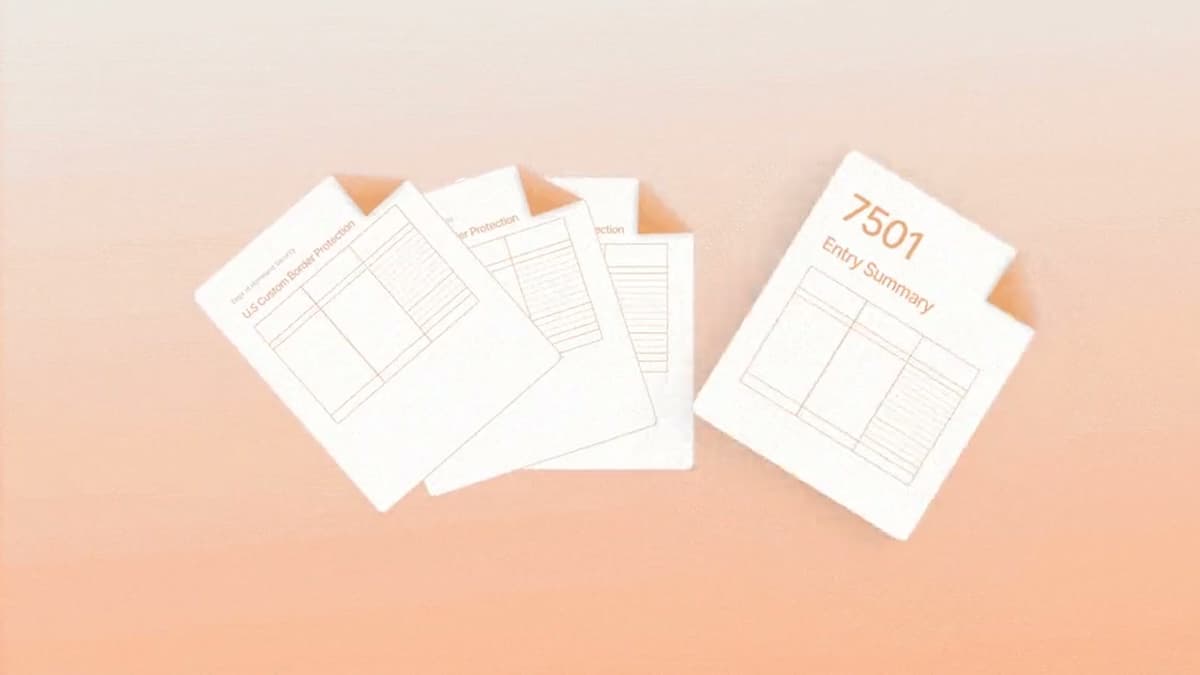
The film had to show that extraction was only the beginning. DocUnlock structured, reconciled, and validated the information required for a filing.
Between the client’s files and the broker’s ABI.
DocUnlock did not ask customers to replace either end of the operation. It connected the systems and behaviour already in place.
Automation without surrendering authority.
Repetitive entry writing could move faster while brokers retained review and submission responsibility.
The intervention
Show the full operating system, not the most visually obvious feature.
The central decision was to avoid ending the story when data left the document. Extraction became one stage inside a larger operational system.
- Client documents
- Extraction
- Reconciliation and validation
- Filing-ready entry
- Existing ABI
- Broker review and submission
The final film
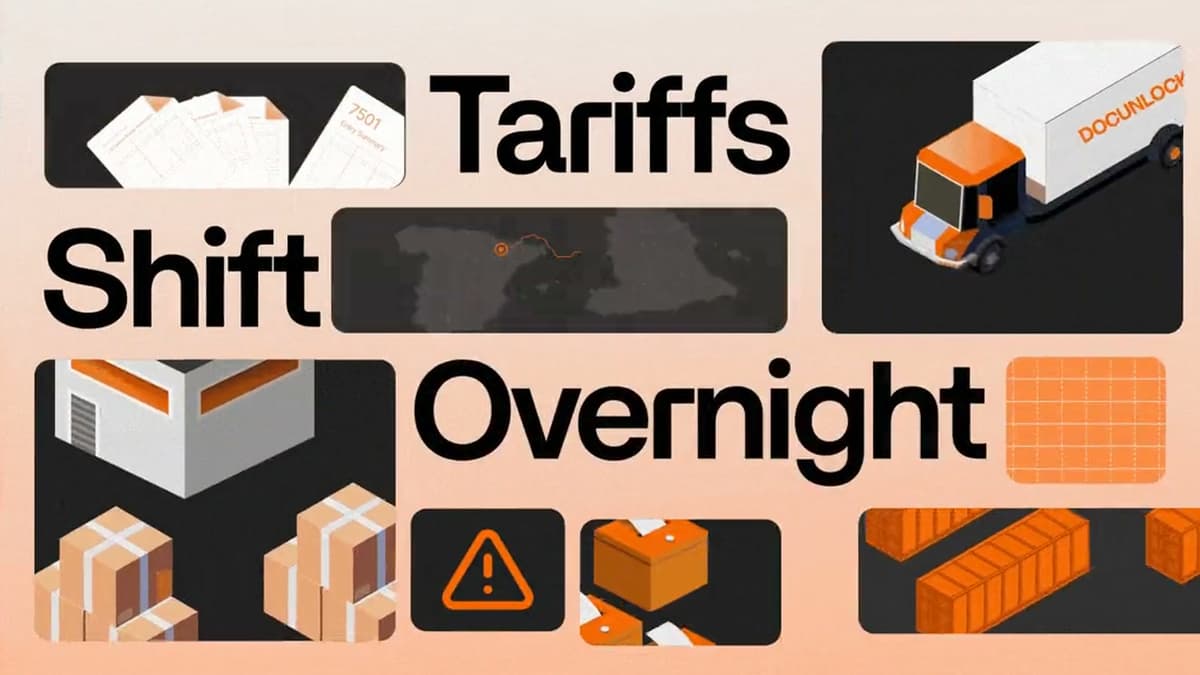
The film follows the work from unpredictable source documents to validated, review-ready customs filings, making the complete operating model visible without requiring a presenter.

Outcome
One explanation connected the product, the workflow, and the reason to trust it.
The result was not a manufactured performance claim. It was a grounded change in what DocUnlock could help a buyer understand before a live explanation began.
The product was no longer reduced to extraction
The story presented DocUnlock as an entry-writing automation system rather than a document-scanning tool.
The adoption model became visible
Buyers could see that DocUnlock worked between existing client behaviour and the ABI their team already used.
The company gained a reusable explanation asset
The film became DocUnlock’s default visual explanation across its homepage, sales, outbound, and social communication.
Future proof had a consistent frame
Results, integrations, workflow demonstrations, and new filing capabilities could sit inside one operating model.
Why it worked
It began with operational risk
The story answered how the product would fit before asking buyers to admire the AI.
It showed completed work
The narrative ended with review-ready outputs, not extracted fields.
It preserved professional control
Automation removed repetitive work while brokers retained review and submission authority.
It made adoption feel incremental
DocUnlock sat between the incoming documents and the ABI instead of asking customers to replace either side.
“We had complex customs automation to explain to an audience that’s sceptical by default. They made it legible without losing the technical credibility.”
Have a product that takes too long to explain?
Send us the product and where buyers get stuck. We will tell you what needs to become clearer and whether a visual story is the right solution.
Show us the product